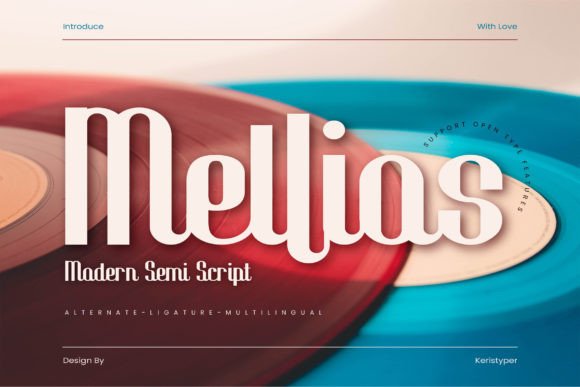
Mellios: A Stylish Display Font
There I was, staring at a blank brand board, trying to figure out how to make a small café feel both warm and modern. It’s one of those moments where the right font can make all the difference. That’s when I stumbled upon Mellios—a semi-script font that felt like it was made for just this kind of project.
Mellios has a smooth, flowing character that blends traditional calligraphy with a contemporary edge. Its curves are elegant but not overly ornate, which makes it versatile enough to work in a variety of design contexts. It carries a sense of refinement without being too formal, which is exactly what I needed for a brand that wanted to feel approachable yet stylish.
I started by testing it on a logo draft. The first thing I noticed was how well it worked as a headline. It added a touch of personality that a standard sans serif might not have. The font’s natural rhythm made it feel like it was designed to be read, even in short bursts. It wasn’t too busy, which meant it could stand alone or pair well with other typefaces.
As I moved into packaging design, Mellios really shone. On a product label, it brought a sense of sophistication that elevated the overall look. Whether it was a coffee bag or a skincare bottle, the font added a visual anchor that drew the eye without overwhelming the design. It also worked well with minimalist layouts, where less is more.
One of the things I appreciate about Mellios is how it handles different sizes and weights. It maintains its clarity and charm even when scaled down for business cards or social media graphics. On a shop sign, it had a friendly yet professional presence, making it ideal for a local restaurant or boutique.
When working on a website header, Mellios added a unique flair that set the tone for the entire brand. It wasn’t too flashy, but it had enough character to make the design feel memorable. Pairing it with a clean sans serif for body text created a balanced contrast that improved readability without sacrificing style.
In editorial design, Mellios proved to be a great choice for headings and subheadings. Its fluidity gave the layout a dynamic feel, while still maintaining a level of professionalism. It worked well in print materials like flyers and posters, where a bold, expressive font can make a strong impression.
For a creative studio looking to build a cohesive brand identity, Mellios served as a key element in the visual language. It helped create a consistent look across different touchpoints, from digital assets to printed merchandise. The font’s versatility allowed it to be used in multiple ways without feeling repetitive.
One thing I always recommend when using a display font like Mellios is to test it in real-world scenarios. Seeing how it looks on a mockup, a sticker, or a website can reveal nuances that aren’t obvious on a screen. It’s also important to consider how it pairs with other fonts. A simple serif or sans serif can complement Mellios beautifully, creating a harmonious balance between structure and style.
When I first tried Mellios, I was impressed by its range of styles and alternates. It included ligatures and multilingual support, which made it more than just a pretty font—it was a practical tool for real design work. The file formats were also a plus, making it easy to integrate into different projects and platforms.
Commercial licensing was another consideration. For a branding project, knowing that the font could be used across various applications without legal issues was reassuring. It meant I could focus on the design rather than worrying about restrictions.
Overall, Mellios is a font that feels right at home in a variety of design contexts. Whether it’s for a logo, a package, or a web header, it brings a level of elegance that can elevate any project. It’s not just a font—it’s a design asset that adds character and cohesion to a brand’s visual identity.
For designers looking to add a touch of sophistication to their work, Mellios is definitely worth exploring. It’s a font that works well in both digital and print environments, and its versatility makes it a valuable addition to any design toolkit.