Quick Draw: A Handwritten Font for Creative Projects
There I was, staring at a blank brand board, trying to figure out how to bring a new café’s personality to life. The client wanted something warm, approachable, and just a little bit quirky. After a few rounds of sketches and mood boards, I landed on a font that felt right—Quick Draw.
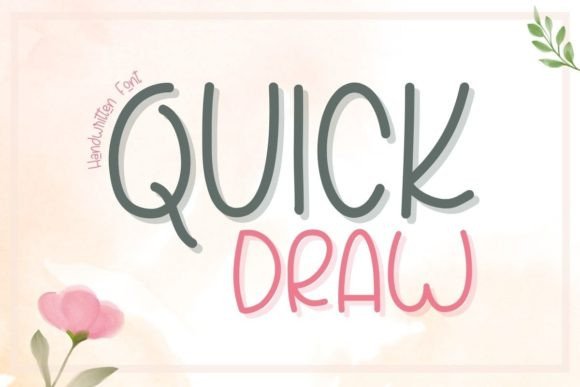
Quick Draw is a neatly handwritten font that carries the charm of a real pen stroke. It doesn’t feel too casual or too formal. Instead, it sits in that sweet spot between spontaneity and structure. The subtle variations in the letterforms give it a human touch, making it perfect for brands that want to feel authentic without sacrificing polish.
I first tested Quick Draw on a logo draft. I paired it with a simple sans serif for contrast, and it worked surprisingly well. The script added a sense of movement and energy, while the sans serif kept things grounded. It wasn’t just about aesthetics—it was about creating a visual language that resonated with the café’s vibe.
As the project progressed, I found myself using Quick Draw in multiple places. On packaging mockups, it gave the product labels a handcrafted feel. In social media graphics, it made headlines pop without overwhelming the design. Even in editorial layouts, it brought a personal touch to headings and captions.
One of the things I appreciated most about Quick Draw was its readability. Despite being a handwritten font, it didn’t sacrifice clarity. That’s not always easy to find. Many script fonts can be hard to read at smaller sizes or in long paragraphs. But Quick Draw held up well in different contexts, whether it was a business card, a shop sign, or a website header.
It also worked well as a display font. I used it for hero sections on the café’s website, where it caught the eye without competing with other elements. When paired with a clean sans serif, it created a nice balance between creativity and professionalism. The font’s personality shone through without overpowering the message.
For branding projects, Quick Draw offers a lot of flexibility. It can serve as a logo font, an accent typeface, or even a supporting typeface in a larger typographic system. Its versatility makes it a great choice for small businesses looking to build a cohesive identity without breaking the bank.
When working with clients, I always recommend testing a font before committing to it. Quick Draw is no exception. I suggest experimenting with different weights, sizes, and pairings to see how it performs in various applications. Whether it’s a label sticker, an Instagram post, or a flyer, the font should feel natural and intentional.
One thing to consider when using Quick Draw is font pairing. While it works well on its own, it also pairs nicely with other fonts. A classic serif can add sophistication, while a modern sans serif brings a contemporary edge. Handwritten fonts like Quick Draw can also complement other script fonts, creating a layered and dynamic typographic hierarchy.
If you’re planning to use Quick Draw in a commercial project, make sure to check the licensing details. The font is part of the Script Amp collection, which includes a range of premium fonts designed for creative professionals. It supports multiple languages and comes in various file formats, making it accessible for different design needs.
Overall, Quick Draw is a font that feels right for the right projects. It’s not the kind of font that fits every situation, but when it does, it adds a unique and memorable quality to the design. Whether you’re working on a café brand, a skincare line, or a handmade shop, Quick Draw can help bring your vision to life with a touch of personality and style.
As I wrapped up the café project, I realized how much I had come to appreciate the small details. Quick Draw wasn’t just a font—it was a tool that helped shape the brand’s voice. And in the world of design, that’s what really matters.
For any designer looking to add a human touch to their work, Quick Draw is worth considering. It’s a font that feels like it was made for real-life design stories, not just digital mockups.